When Father Tim Birney began his first assignment as a priest in 1998, he never imagined a parish Mass would introduce him to a form of missionary work that would shape his life for more than two decades.
Just a few months after graduating from the seminary and being ordained, Father Birney was assigned to St. Lawrence in Utica, Michigan, where his pastor invited Unbound, then known as Christian Foundation for Children and Aging (CFCA), to participate in a Mass.
Father Birney had long been inspired and moved by the work of missionaries around the world. But he also knew that he was not necessarily called to the kind of travel-based missionary work he so admired.
Unbound offered another way to answer that call. As Father Birney learned about the organization’s work with families experiencing poverty around the world, he realized sponsorship could provide a different way to live out that missionary calling.
Inspired by what he heard and saw that day, Father Birney became a sponsor. Twenty-seven years later, that decision continues to shape his understanding of Christian discipleship.
“I choose to support families around the world as a sponsor because it’s the core of who we are as a Christian people,” he said.
October 29, 2026 | Faith
One journey, two callings
From sponsor to Unbound preacher
By Tammy Marino
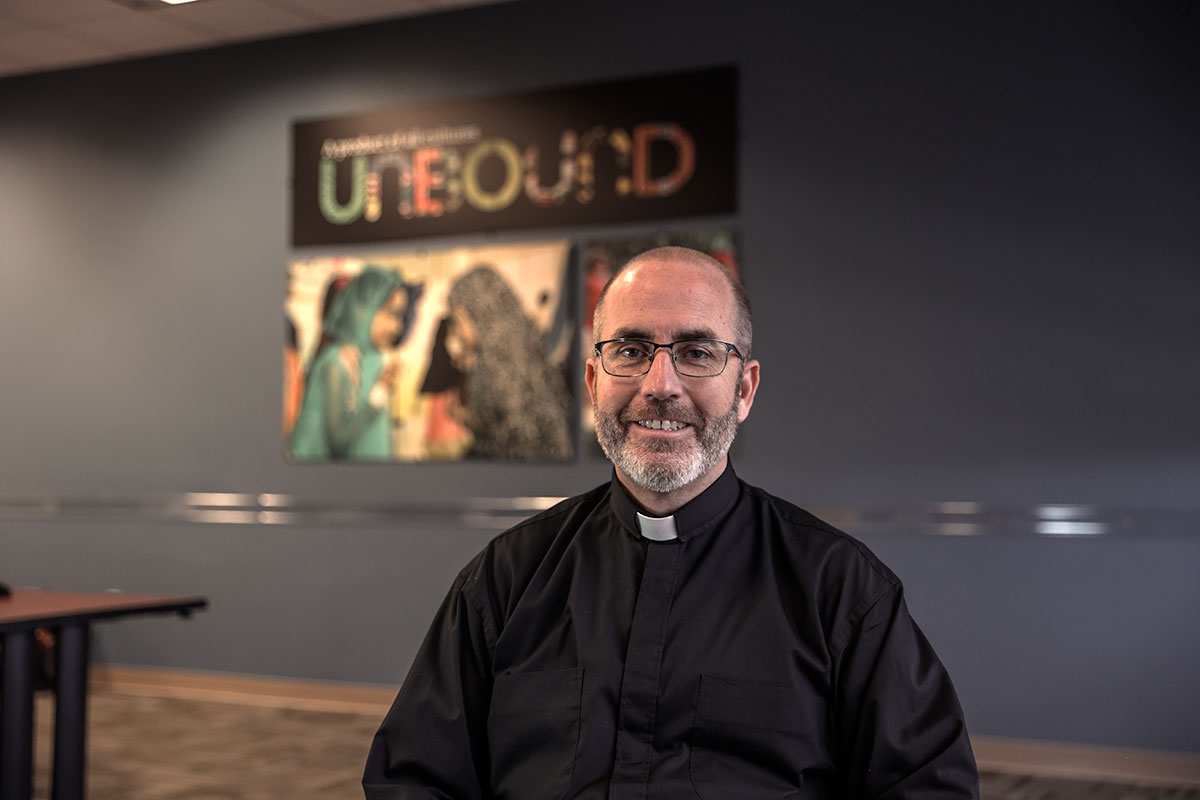
Father Tim Birney became an Unbound sponsor in 1998 after learning about the organization’s mission and work while at St. Lawrence in Utica, Michigan — the first church he was assigned to after being ordained.
I choose to support families around the world as a sponsor because it’s the core of who we are as a Christian people.
— Father Tim Birney, Vicar General and Moderator of the Curia for the Archdiocese of Detroit
A relationship that goes both ways
For Father Birney, however, sponsorship has never been simply about financial assistance. Its greatest gift has been the relationship that develops between sponsor and sponsored friend — a relationship in which both people have the opportunity to give and receive.
That relationship has become particularly meaningful through the letters he exchanges with his current sponsored friend, 16-year-old Katerin, in Honduras.
As is typical in sponsorship correspondence, in one exchange Katerin had asked about Father Birney’s family. At the time, Father Birney’s mother was ill, and Katerin responded by offering prayers and well-wishes.
When Father Birney’s mother died, Katerin sent a letter of compassionate condolence.
“Here I thought I’m the priest, and I’m getting ministered to by a teenage girl in Honduras,” Father Birney said.
The experience reinforced something he has learned repeatedly through sponsorship: The relationship does not flow in only one direction.
For families experiencing poverty, having a sponsor can mean more than receiving material assistance. It can also provide a place to be heard — to share thoughts, feelings, accomplishments and experiences with someone who genuinely cares.
Father Birney believes sponsorship helps amplify voices that are often overlooked. Through the relationship created by sponsorship, sponsors can encourage sponsored friends and assure them that someone is listening.
“It gives them a place where they can be heard,” he said.
The simple act of listening can affirm something fundamentally human: Someone cares about me.
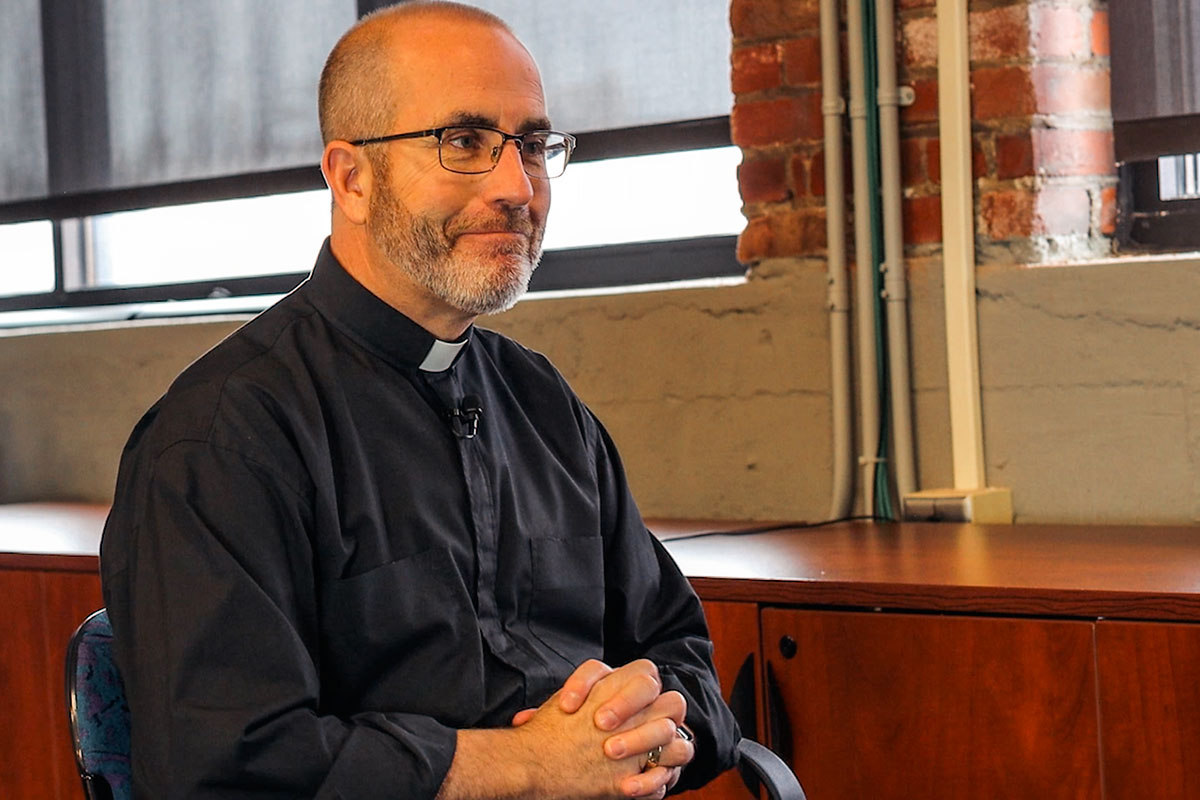
The relationship forged through sponsorship is one of its greatest gifts, according to Father Birney.
Learning from those who have less
Sponsorship has also challenged Father Birney to examine the assumptions we may carry about comfort, wealth and happiness. As he came to terms with all the blessings we often take for granted, he became increasingly aware that some of the happiest people he has encountered are those with the least money and material possessions.
That lesson has also influenced what Father Birney hopes his sponsorship means to the families he connects with. He hopes his contributions toward basic needs such as food, housing, clothing and education can ease some of the worry and stress that families experiencing poverty face.
But he also hopes they understand the spirit behind the gift.
“The most meaningful contribution I’ve provided is a prayer that the assistance I’m giving through friendship demonstrates there are people willing to share and do a little sacrificing so others may have less worry,” he said.
For Father Birney, the goal is not simply to provide something for another person. It is to walk with them.
And that distinction has become central to how he understands both sponsorship and his faith journey.
Walking with families
The idea of walking alongside others has a particular personal meaning for Father Birney.
He has always enjoyed walking, and pilgrimage has played an important role in his priesthood.
He has led men discerning the priesthood on pilgrimages along the Camino de Santiago in Spain and France, inviting them to walk in the footsteps of the saints.
For his 25th anniversary as a priest, Father Birney returned to the Camino and became a lone participant for the full 500-mile pilgrimage.
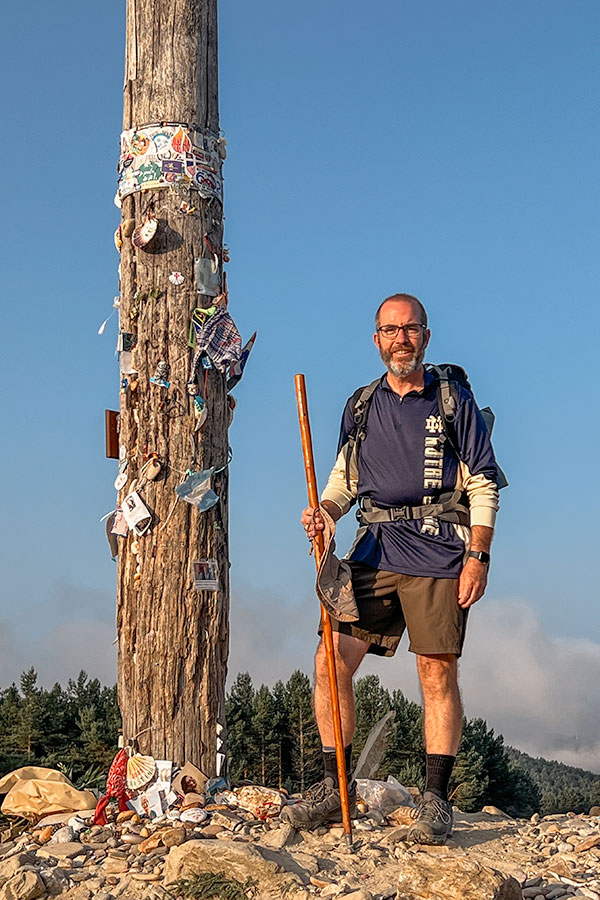
Father Birney views walking as a spiritual act, and he has led men discerning the priesthood on pilgrimages along the Camino de Santago.
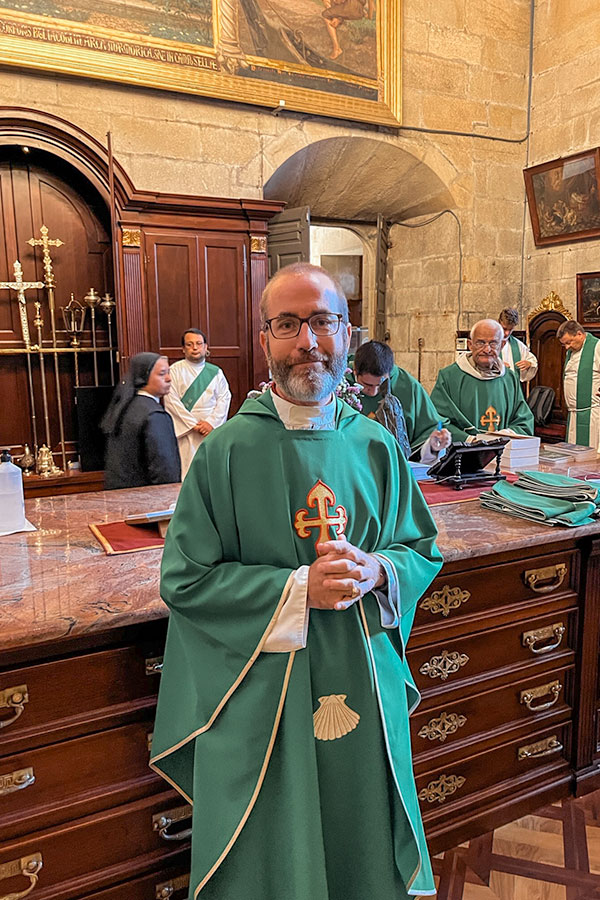
Pilgrimage and walking alongside others have always played an important role in Father Birney’s 28-year priesthood.
For him, walking is both a physical and spiritual act.
“We pray with our feet,” he said.
For Father Birney, walking creates space for conversation, reflection and a deeper awareness of both the people and the world around us. In much the same way, walking with families experiencing poverty has become part of his faith journey.
Sponsorship, he believes, is another form of that journey — an opportunity to walk alongside another person as they work to build a more secure future.
From personal connection to sharing with congregations
A little over a year ago, Father Birney found himself wearing many hats in the Archdiocese of Detroit. As vicar general, moderator of the curia and vicar for the clergy, he already had a full slate of responsibilities.
But he also found himself with some flexibility for weekend scheduling. He began thinking about how he might use that time to help other people of faith discover an opportunity he had experienced himself. And he felt it was a good opportunity to spread Unbound’s mission to other people of faith who deserved the opportunity to demonstrate that love for the Lord is inseparable from love for the poor, as Pope Leo has said.
He visited Unbound’s preacher page online and applied to join a growing number of priests who travel to parishes across the United States, inviting Catholics to consider sponsorship.
Father Birney began preaching with Unbound a little over a year ago. He quickly discovered that the role allowed him to bring together central aspects of his priesthood: proclaiming the Word and celebrating the Eucharist while inviting people to put their faith into action.
Through his preaching, Father Birney can stand before a congregation, celebrate the Eucharist, bring Scripture alive and, within that context, introduce people to Unbound’s mission.
He knows that many people want to help those experiencing poverty but do not always know how.
They may hear the call to serve the poor in a homily. They may feel moved by stories of people living in difficult circumstances. But translating that desire into action can be difficult.
Unbound provides a tangible way to do that.
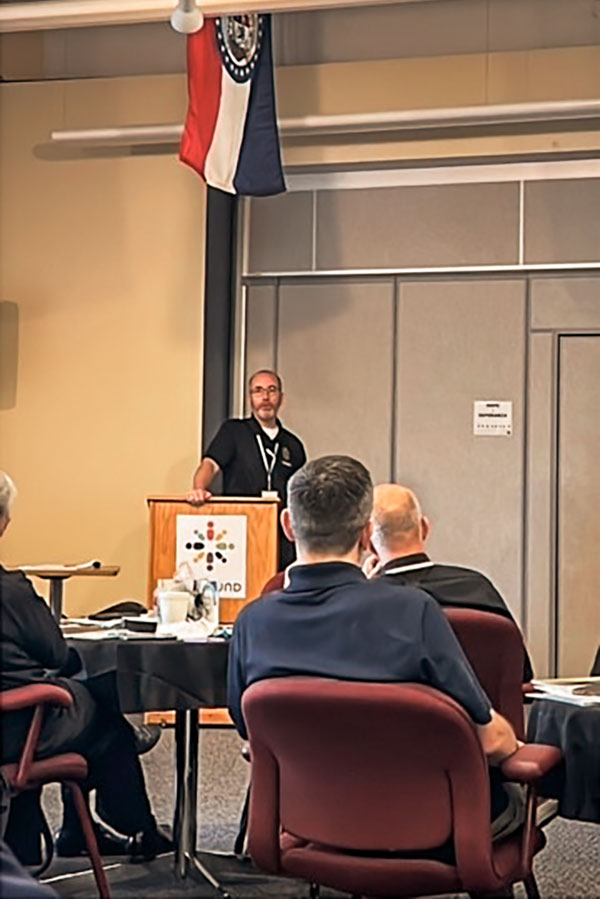
Father Birney is seen speaking at Unbound’s most recent preachers conference.
Father Birney believes that Unbound’s Catholic roots, connection to Catholic social teaching and decades of experience give families and parishes an opportunity to participate in the Church’s social mission in a direct and trusted way.
“It’s important for Catholics to support those experiencing poverty because the Lord told us to,” he said.
At the heart of Father Birney’s understanding of sponsorship is the dignity of every human person.
“We all are created in the likeness of God. We all are God’s beloved sons and daughters,” he said.
Sponsorship, then, is an expression of the Christian call to care for people who are poor and marginalized and a way to recognize the dignity of every human person. That belief is central to Catholic social teaching and to Father Birney’s understanding of the Gospel.
One person at a time
After more than two decades as a sponsor and more than a year as an Unbound preacher, Father Birney has come to see the ministry through a simple lens: Focus on the person in front of you.
The scale of global poverty can be daunting. Faced with a problem so large, it can be tempting to wonder whether one person’s contribution can really make a difference.
Father Birney often points to the example of Mother Teresa. When asked whether her work had made a measurable impact on poverty, he recalls that she acknowledged she probably had not moved the needle.
But that was never the goal. The goal was to find one person who needed food, safety, love or recognition of dignity, and then help that one person.
And then, to find another.
That is also the spirit Father Birney sees in Unbound. It is a mission that gives individuals an opportunity to live out the Great Commandment to love God and love one’s neighbor as oneself.
And so, when the global problem of poverty seems overwhelming, Father Birney encourages people to think small.
“We can easily question, ‘What would my little, tiny ripple do to that huge ocean of a problem?’ Well, let’s not focus on poverty,” Father Birney said. “Let’s just focus on the person. And by focusing on one person, you’re changing one person’s life and that’s enough.”
We can easily question, ‘What would my little, tiny ripple do to that huge ocean of a problem?’ Well, let’s not focus on poverty. Let’s just focus on the person. And by focusing on one person, you’re changing one person’s life and that’s enough.
— Father Tim Birney, Vicar General and Moderator of the Curia for the Archdiocese of Detroit