Honeybees live in a highly structured social system.
While each bee serves a specific role in the hive, they all work together for a common goal — ensuring the survival and growth of the colony.
When Erick and Janeth in Cuernavaca, Mexico, teamed up years ago to start their apiary (beekeeping farm), they already had a healthy dose of respect for the disciplined lifestyle of the tiny pollinators.
The husband-and-wife duo didn’t just look at their idea as a business endeavor to improve their livelihood; they saw the bigger picture: the benefit to the wider community, the ecosystem and the bees themselves.
They think of beekeeping as a partnership between the beekeepers and the bees, and a commitment that Erick refers to as “noble work.”
“Humans often live with disorganization and distractions,” Erick said of what the bees have taught him throughout his life. "Bees live in a completely disciplined world. Every being inside the box has its job and way of life.”
Erick’s love of bees and desire to work with them started when he was 18 years old, but he lost his first apiary to a forest fire and never financially recovered.
It wasn’t until his family became a part of Unbound nine years ago and Janeth became inspired by a business workshop she attended that Erick began to consider giving his dream a second chance.
“My husband said, ‘Who will help me?’” Janeth said about encouraging Erick to restart his apiary. “Our children were small, and in our town, many people are afraid of bees ... and I said, ‘I’ll help you.’
“That’s how we began the dream. I became his assistant … so we made a team, he and I, and started beekeeping.”
In 2023, a grant from Unbound Livelihood Growth helped Erick and Janeth take their apiary to new heights, and they haven’t looked back since.
August 17, 2026 | Livelihood Growth
Covenant of the keepers
A family’s beekeeping business reaches new heights with Unbound Livelihood Growth
By Kati Burns Mallows
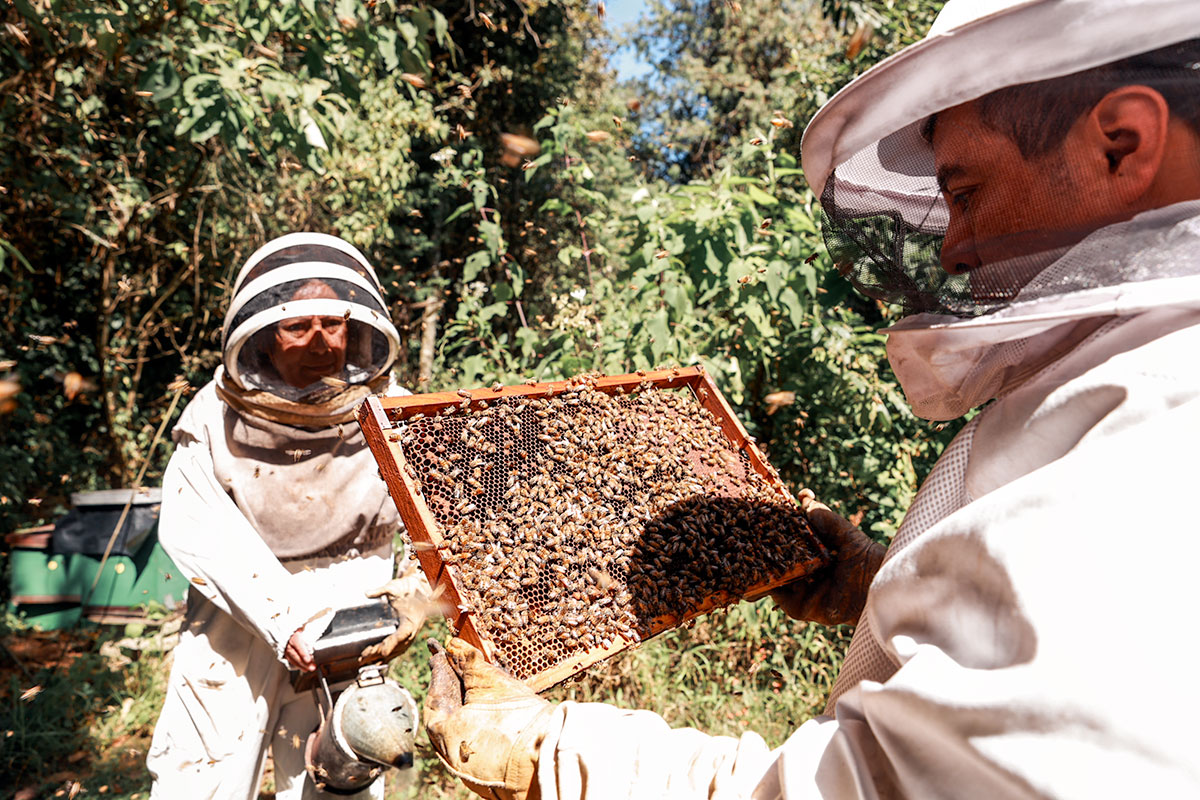
Erick (right) relaunched his beekeeping endeavor with assistance from his wife, Janeth (left) in managing the hives safely and efficiently.
The 'noble work' of beekeeping
Worldwide, Mexico ranks 10th in honey production. The country boasts 45 species of honey-producing bees, and beekeeping is considered a “vital livelihood” for hundreds in rural communities.
As pollinators, bees play an important role in the world’s ecosystems, ensuring the reproduction and diversity of food crops as well as sustaining human livelihoods.
According to the United Nations, pollinators improve the food production of 2 billion small farmers worldwide, helping to ensure food security for the world’s population. However, bee populations worldwide have been declining for decades due to habitat loss, changes in weather patterns and excessive use of pesticides.
As over 80% of human food is supplied by plants, the U.N. posits, the loss of pollinators would lead to “exponential loss of biodiversity, endangering our ecosystems and our diet.” Goal 15 of the United Nations Sustainable Development Goals (SDGs) seeks to reverse this issue by conserving life on land — protecting and restoring terrestrial ecosystems and stopping biodiversity loss, among other things.
As beekeepers, Erick and his family are helping contribute to SDG15. Erik’s love of bees stems from his overall love of nature and being taught as a child to do what he could to “not cause harm to society.”
As a teen, Erick attended an agricultural high school where students could focus on such things as learning about livestock production and forestry. Erick enjoyed working in the forestry nursery and learning how to reforest and plant trees where needed.
Few students were interested in learning beekeeping because of one obvious hazard of the trade — bee stings are painful.
“You really have to like bees because they’re not easy,” said Erick, who was nursing a bee sting on his forehead the day he was interviewed. “I saw [beekeeping] was a good economic project and that it went hand in hand with my love for nature.”
Erick also worked as a carpenter at one time and found he enjoyed making his own bee boxes for his apiary.
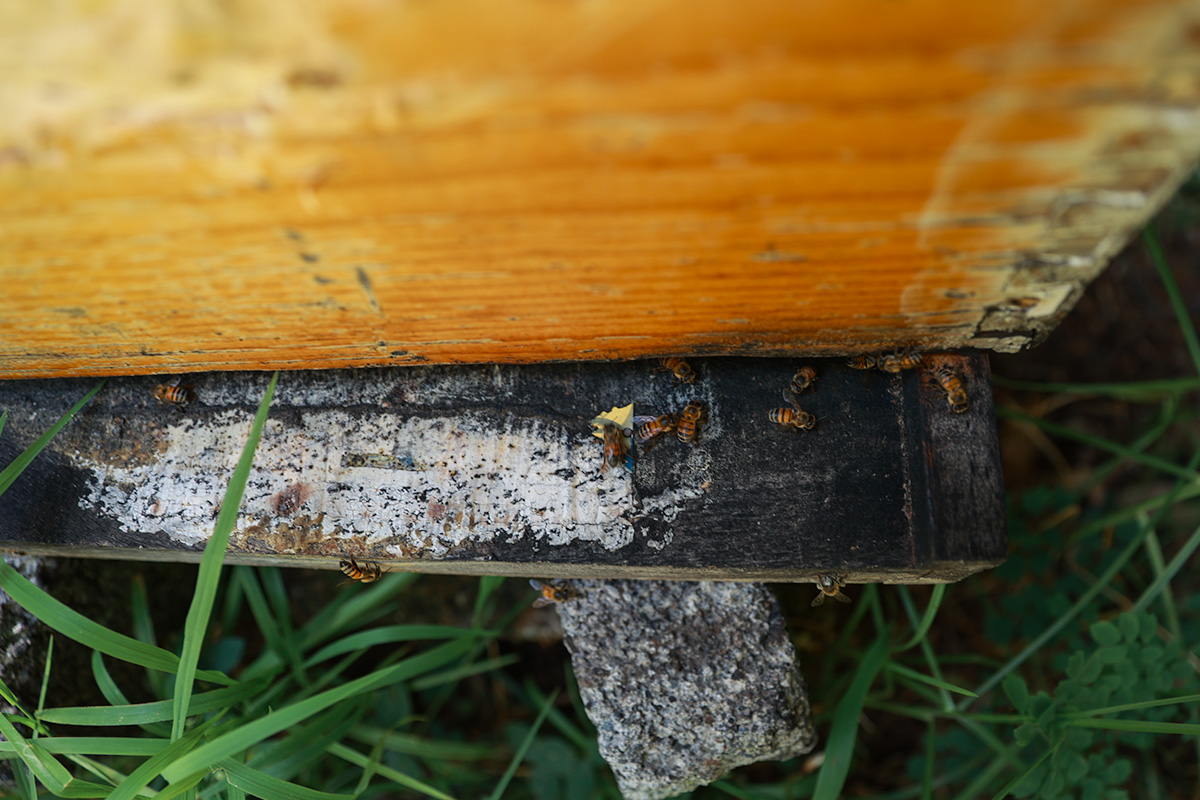
The caste system of honeybees typically consists of one queen (reproductive female) per colony, workers (non-reproductive females) and drones (males).
I saw [beekeeping] was a good economic project and that it went hand in hand with my love for nature.
— Erick, Father and beekeeper in Mexico
Erick and Janeth relaunched their apiary with five bee boxes, on rented land, over three miles from their home in a more urban area.
Though their equipment was rudimentary in the beginning and the distance made transporting the honey from the apiary to their workshop difficult, they’ve had harvests since relaunching that have helped them overcome financially difficult times.
With Janeth applying smoke to the hives (to calm the bees), Erick harvesting the honey and their teenage children helping process it, their apiary continues to grow year after year.
Today, the family’s apiary has 35 bee boxes that can house over a million bees during peak summer months. Each bee box in production is worth about 3,500 pesos, or $203.68.
Sponsorship has helped the family grow their business. Occasionally Janeth has used savings from some of their youngest daughter’s sponsorship funds to help buy wax (bees use it to form the honeycomb structure) and sugar (bee food) for the apiary.
Janeth said it’s important for her family to be able to decide how to use the sponsorship funds.
“Our needs are not always the same, and I divide it among us all — my children and even the bees,” Janeth said. “I can’t neglect the bees.
“Just as they give to us, we must give to them. We take only what we need and leave the rest for them.”
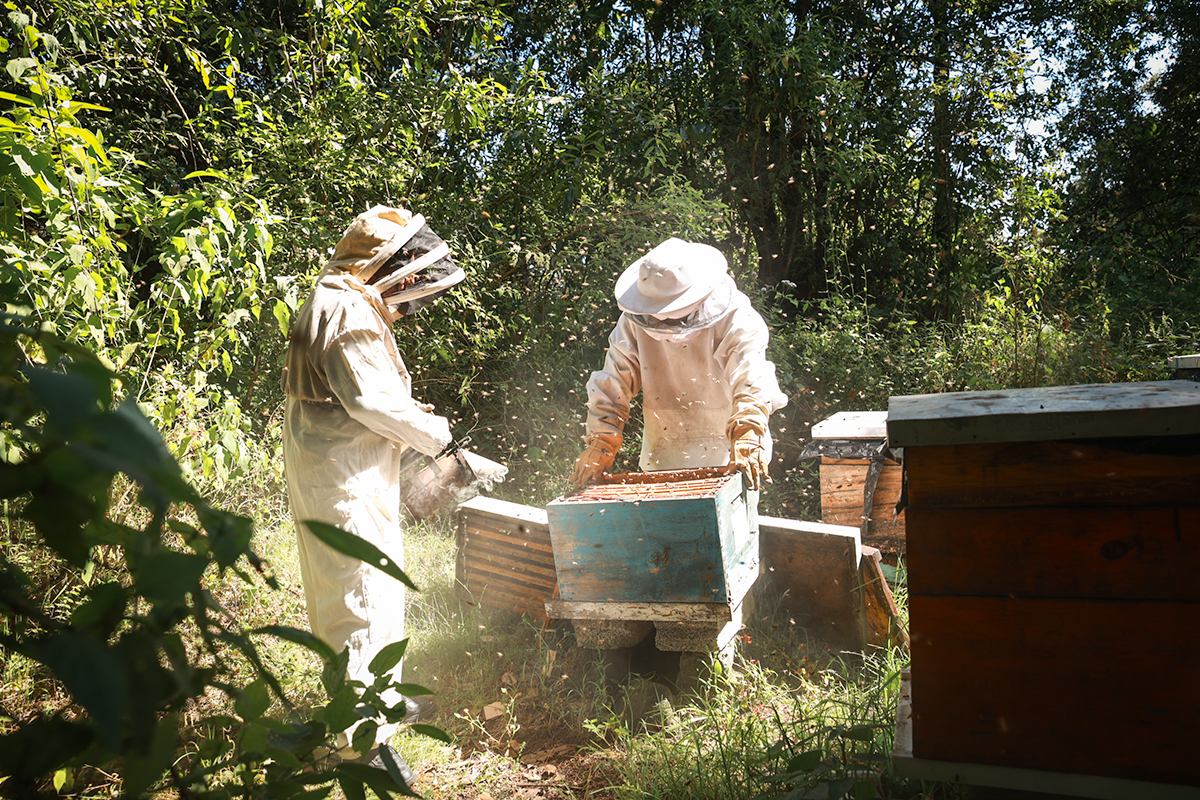
Janeth and Erick work as a team harvesting honey at their apiary in Mexico. Janeth applies smoke, which helps calm bees and reduce their aggression when feeling defensive, while Erick collects the honey.
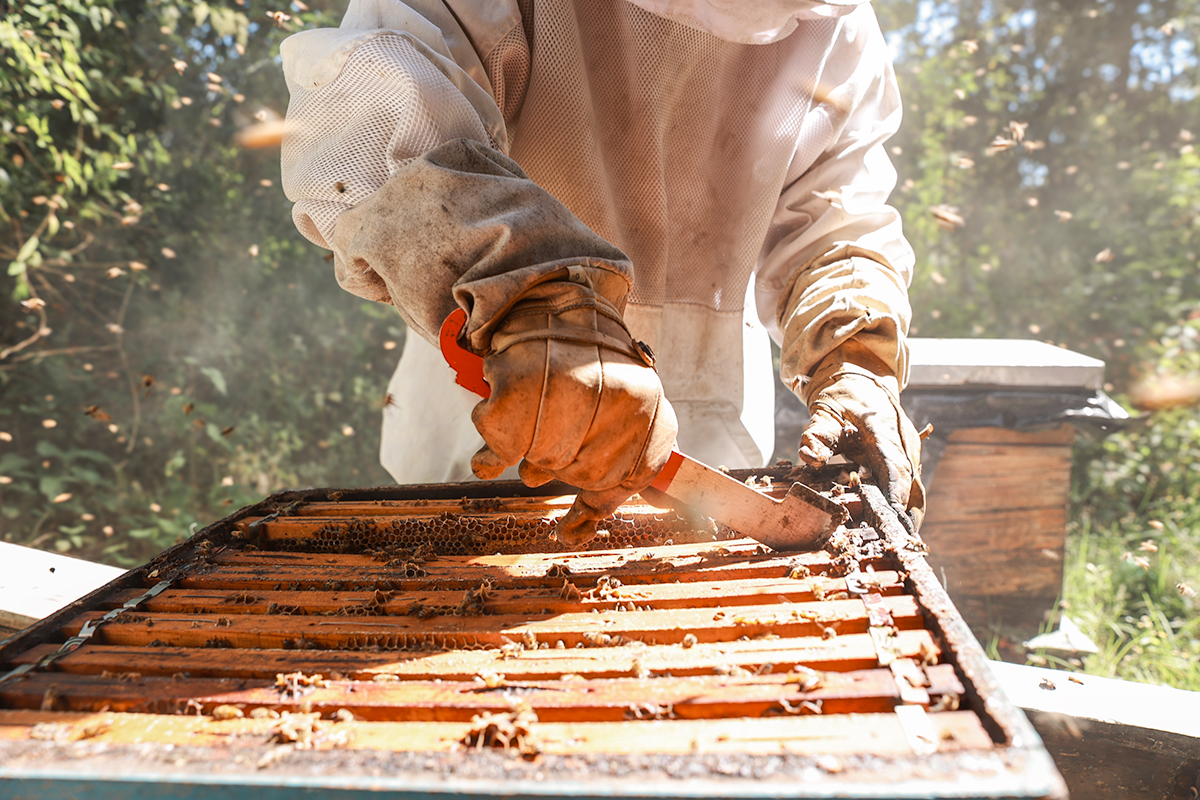
Erick became skilled in beekeeping after attending an agricultural high school at 18.
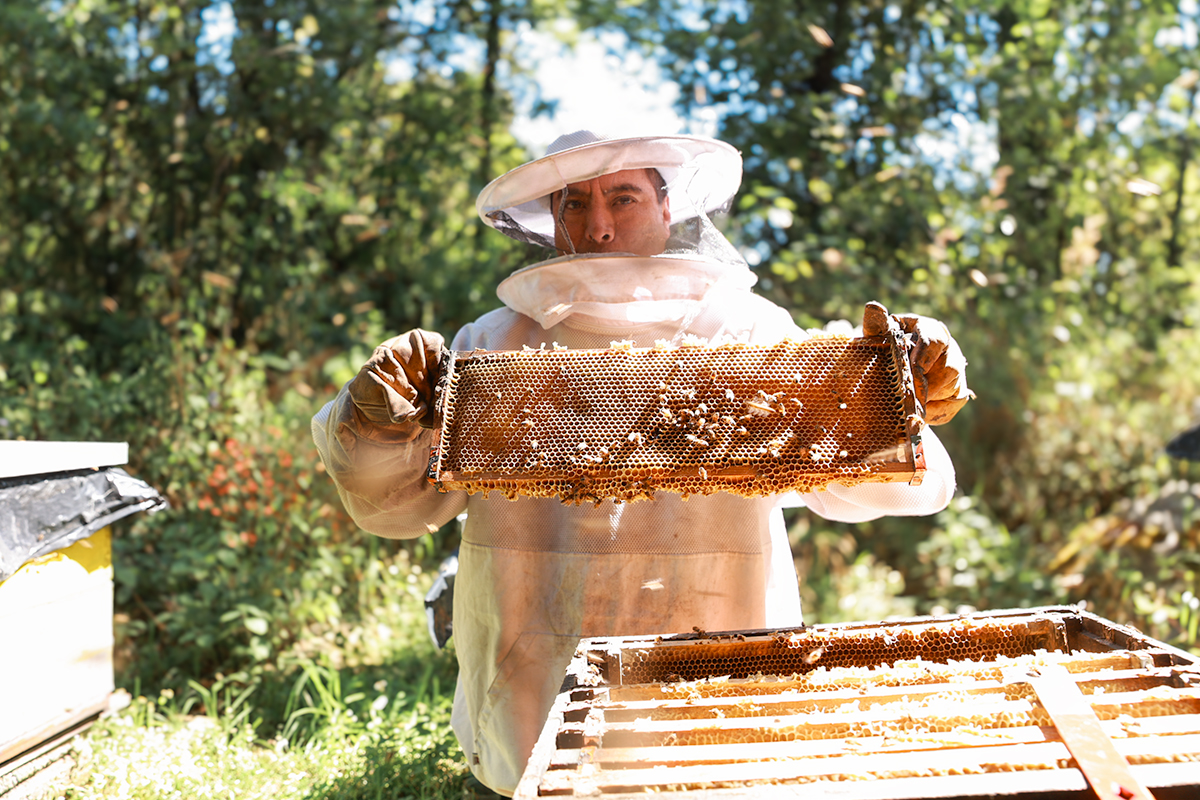
Erick and his family have grown their apiary from five bee boxes to 35, which can house over a million bees during peak season.
Unbound Livelihood Growth set their small business up for success
Erick and Janeth’s apiary is now set up in an ecological corridor in their community, which encompasses protected land designed to link isolated patches of natural habitat across a landscape to aid in conservation of biodiversity.
Erick is proud to have his apiary in the forested ecological corridor. Because the location is far from any orchards or farmlands that use fertilizers, herbicides or pesticides, his honey is naturally processed and is certified as organic. In addition, the size of his apiary helps preserve the forest, as loggers seeking to illegally cut the trees are deterred from approaching the area for fear that the noise will anger the bees.
Since joining Unbound, Janeth has attended many microenterprise workshops hosted by the local office, which helped her learn how to organize the family’s expenses and practice saving.
“One workshop taught us how to manage the financial side of a business,” Janeth said. “At first, we thought the business was just ours, so we took everything for ourselves. But no, a business should capitalize on itself.”
Janeth said the workshops helped change her perspective and taught her that part of their income should be for the family while the other part should be invested back into the business.
Now, the family is careful to set aside some of their business earnings for bee feed, and packaging and labeling for their products.
In 2023, the family received a grant from Unbound Livelihood Growth (known as small business accelerator at that time) for $1,008 USD.
The Unbound Livelihood Growth program provides an infusion of capital to existing small businesses in marginalized communities to help them target barriers that are preventing growth. Since 2018, Unbound has provided over $1 million in support to entrepreneurs.
With the grant, Janeth and Erick purchased a super-curing table, a piece of equipment used to hold honey frames in a warm, dry environment, making the curing extraction easier.
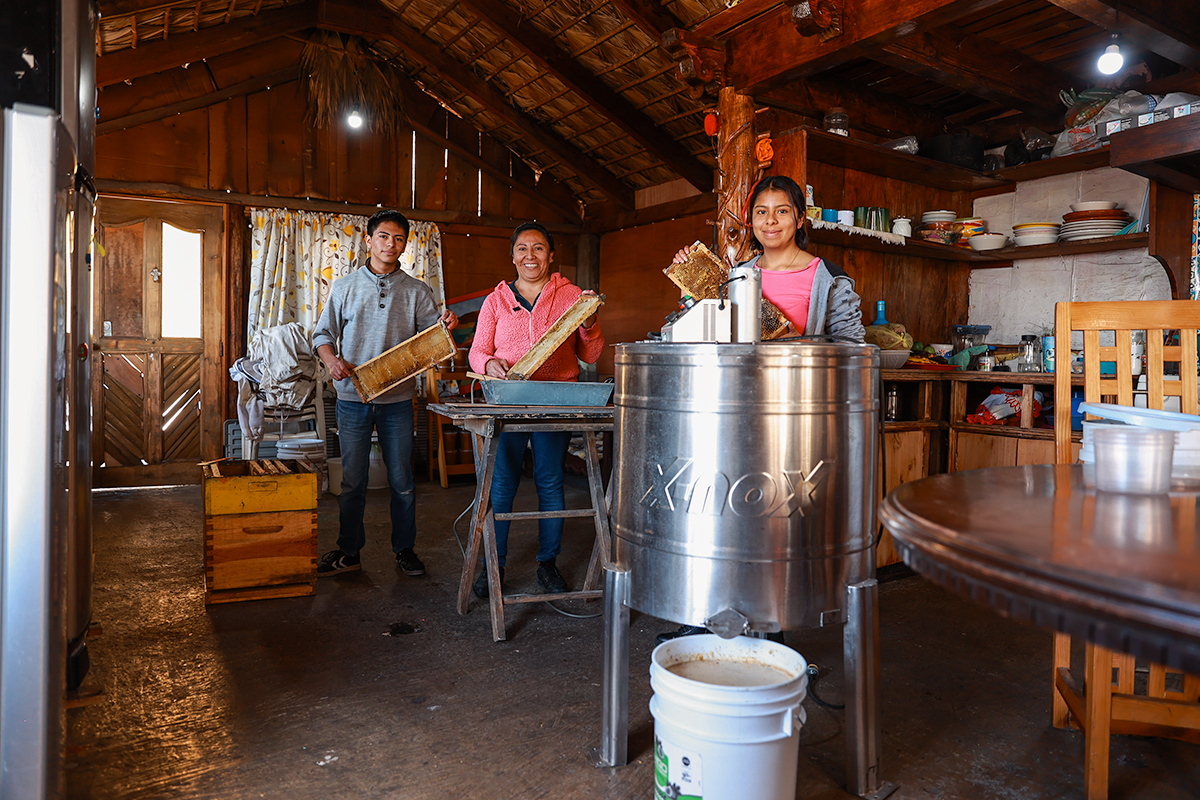
Two of Erick and Janeth’s children help process the honey in the kitchen of the family home in Mexico. Pictured left to right, Diego, 16, Janeth, and sponsored youth Lizeth, 18, stand in front of the super-curing machine purchased with an Unbound Livelihood Growth grant.
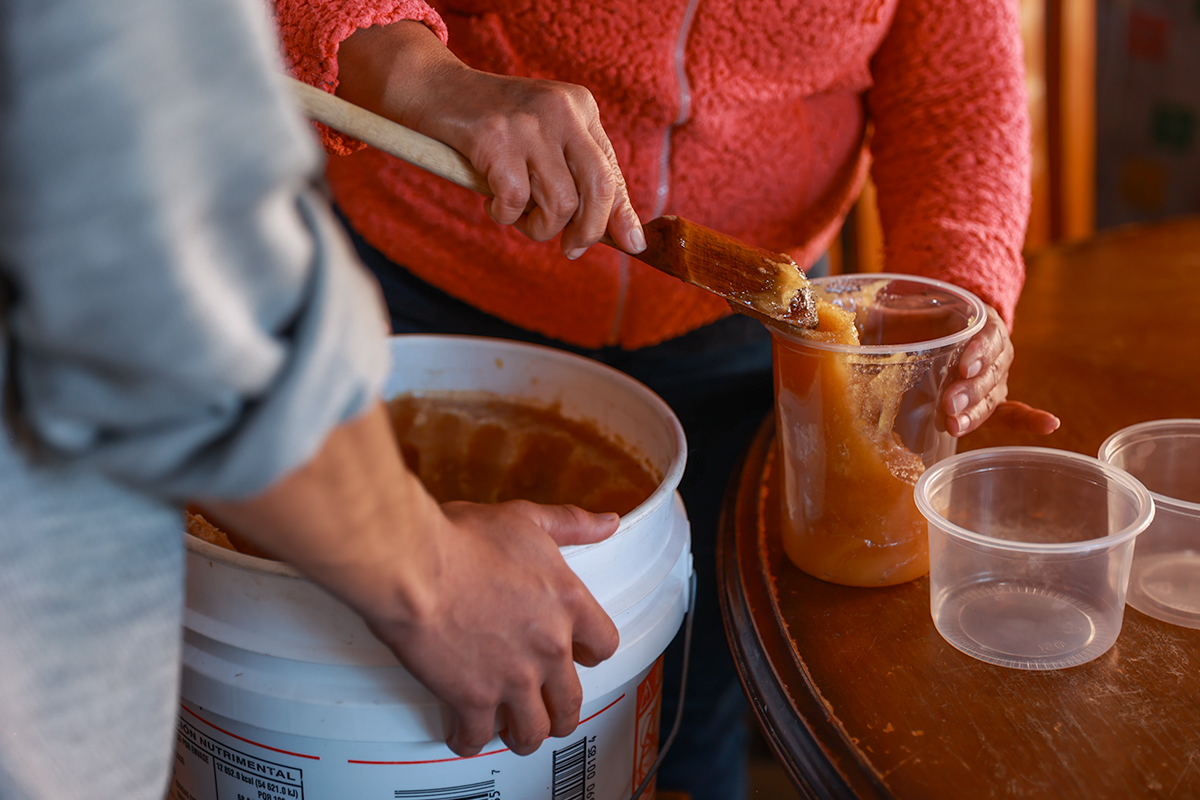
Janeth demonstrates the manual way the family used to add the honey in containers after processing.
Before the super-curing table, Janeth said honey was often wasted during extraction because they were manually trying to transfer the honey from one container to another with a strainer while cleaning the wax from it.
“The machine catches the wax and makes the honey come out cleaner and purer,” Janeth said. “Now the honey goes directly into the container we use for commercialization.”
Harvesting and processing used to take the family three days to accomplish by hand. Thanks to the new equipment, now the process takes only one day, saving the family time and effort, and ensuring no honey goes to waste.
The family has since been able to increase their production each season and improve the quality of their honey.
The new success of their apiary has Erick and Janeth excited for the future, and they’re working toward expanding the business to reach more potential consumers beyond just their community.
Now that they have been able to manage 35 bee boxes, Erick wants to grow his apiary to 100 bee boxes and export their honey. He’s also motivated to capitalize on his carpentry skills and begin manufacturing complete beekeeping boxes to sell.
For her part, Janeth has already been seeking opportunities to make their organic honey a name brand.
“I dream of seeing our brand on a jar; I want to see jars on shelves with the word 'organic' on them, and to keep producing in greater quantity,” Janeth said.
Together, the family will keep striving to achieve their business goals, as both Janeth and Erick believe poverty can be overcome by hard work.
“First, you have to get up early, motivated, saying, ‘Let’s see what we’ll do today,’” Janeth said. “Move, move, so that everything can bear fruit.”
In thinking of the hives that he lost to fire in the past, Erick said a person must refine themselves to move forward and to be self-sufficient.
“Many people fear failure, but failure is inevitable, “Erick said. “I have failed many times. Rising from failure is what makes you stronger.”
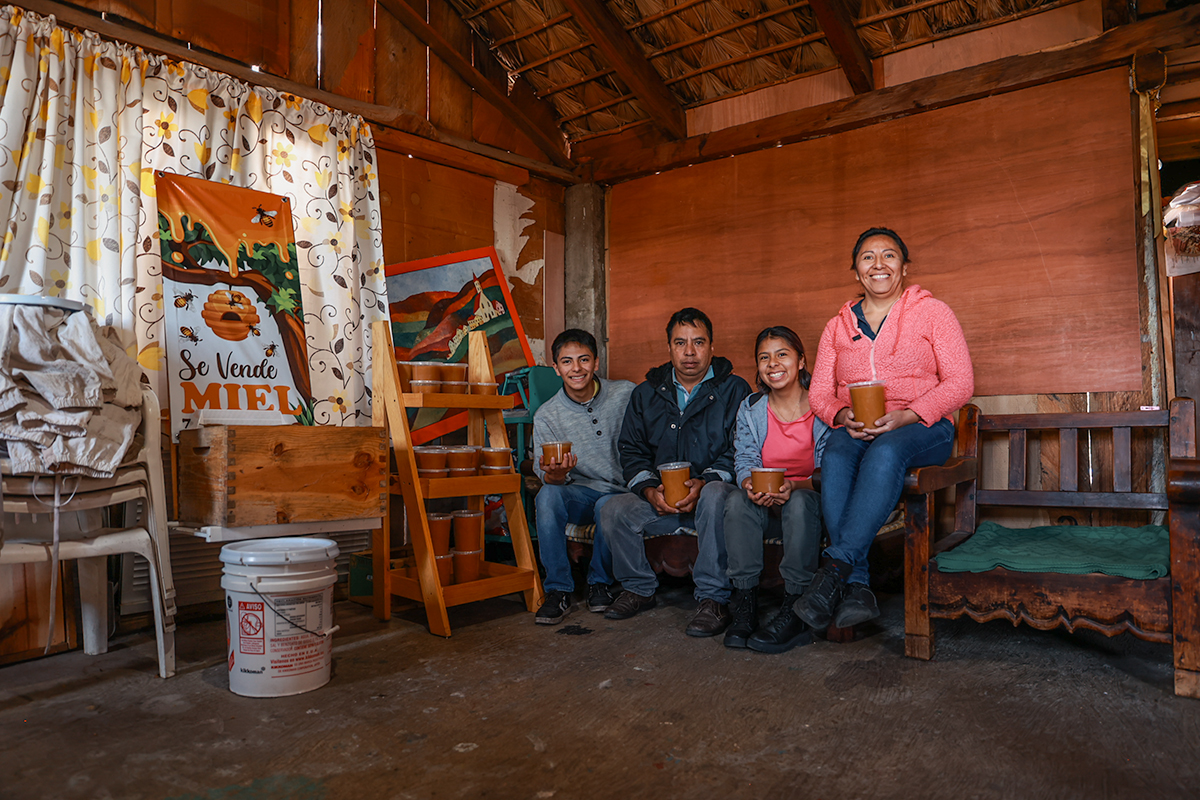
From left to right, Diego, Erick, Lizeth and Janeth in their home in Mexico.
I dream of seeing our brand on a jar; I want to see jars on shelves with the word ‘organic’ on them, and to keep producing in greater quantity.
— Janeth, Mother and beekeeper in Mexico
Unbound Field Communications Director Henry Flores, Regional Reporter in Latin America Oscar Tuch and Multimedia Producer/Editor Danika Wolf contributed information and photos for this story.