Sometimes luck brings people together.
This is what María said about her path crossing — not once, but twice — with her future husband, Francisco, in Guatemala in the late 1960s.
María and Francisco had a lot in common.
Just a year apart in age, they were born and raised in the same small community in northern Guatemala. They both had five siblings, and their parents were farm laborers. With no school in their rural community, neither had the opportunity to learn to read.
Both families migrated at different times to find work on the southern coast of Guatemala, and it was there, on a farm, that María and Francisco’s paths crossed again as young adults. María worked with the other women, grinding corn on the stone to make tortillas to feed the farm workers, while Francisco was a laborer who cleared the farmland with a machete in hand.
Their families were strict; they were only allowed to speak to one another after Francisco’s mother made the request to María’s father.
“Even if he was just a machetero (a farm laborer using a machete), he worked hard,” said María in an interview with Unbound in mid-2025, talking about what first attracted her to Francisco.
Those chance encounters resulted in a year-long courtship and, eventually, a marriage built on love and faith that spanned almost 60 years.
February 11, 2026 | Elder Sponsorship
Faith, love and sacred corn
An elder couple’s love story spans almost 60 years of hope and hardship
By Kati Burns Mallows
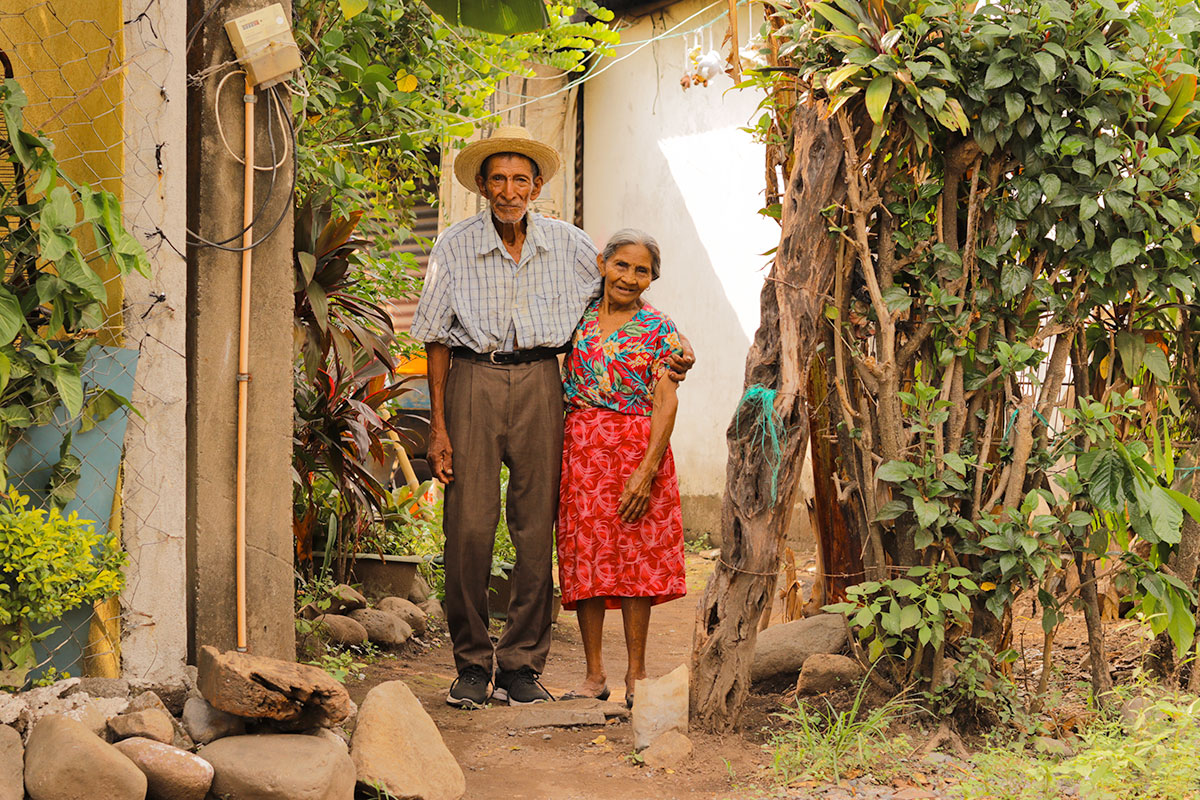
Francisco and María met first as children in one community and then as young adults in another. They spent a year dating to “see if they were the right fit for each other.”
'To love and be loved'
The late Pope Francis, the Roman Catholic Church’s first Latin American pontiff, believed that love was “the greatest power for the transformation of reality.”
Pope Francis once said in regard to love, “The heart of the human being aspires to great things, lofty values, deep friendships, ties that are strengthened rather than broken by the trials of life. The human being aspires to love and to be loved. This is our deepest aspiration: to love and be loved; and definitively.”
The adobe walls of the place that Francisco and María called home in their later years are adorned throughout with visuals that reflect the love that shaped their lives together.
Photos of family hang above the worn couch. In another room, situated around a faded poster of a waving Pope Francis, is framed artwork of Jesus on the cross and a banner depicting Jesús Nazareno del Perdón (Jesus the Nazarene of Forgiveness).
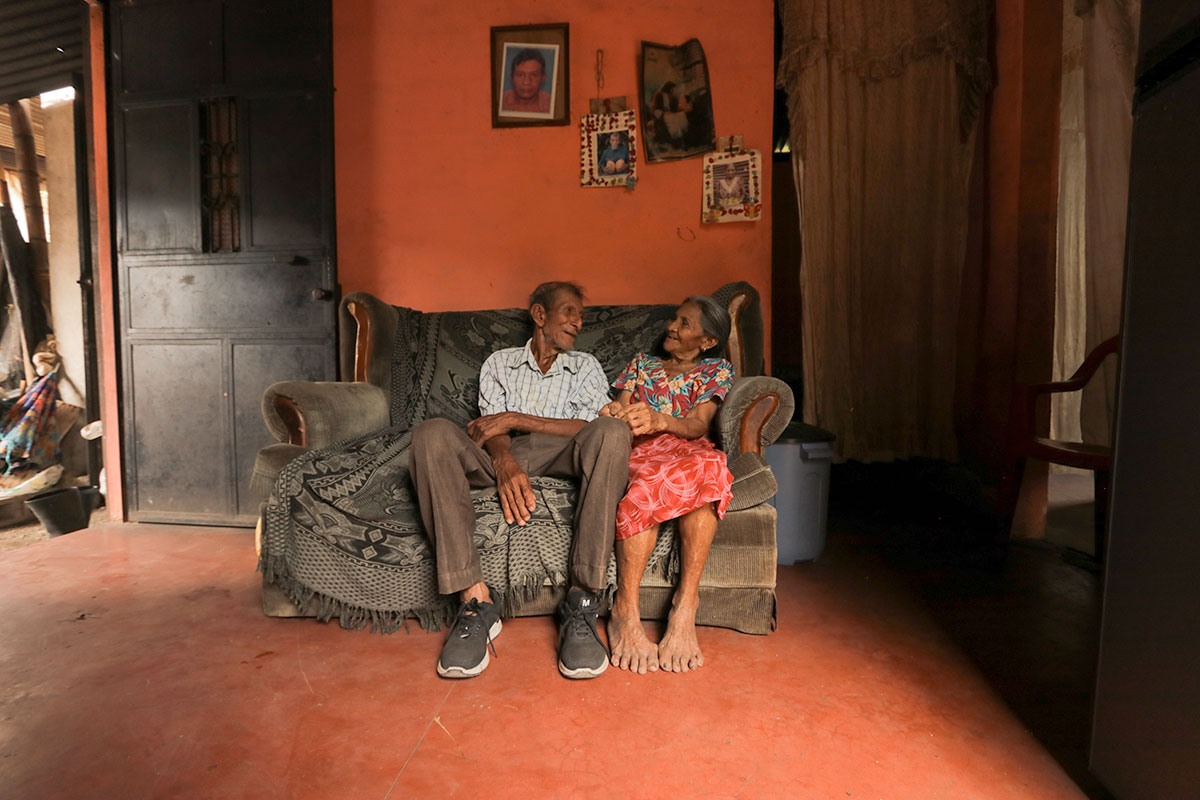
Francisco and María enjoy each other's company at the home in Guatemala they share with one of their daughters and their grandchildren.
Their lives were filled with hardship, but they found resilience in faith, love, hard work and the hope of a better life for their children.
The couple settled in Patulul, a small town in the southern region of Guatemala known for its natural beauty and agriculture, with a population just over 11,000. Francisco continued working as a machetero, clearing farmland, while María managed the household.
Each week, they would walk 30 minutes to the community parish church to worship, and every day they would pray together for three main things — for God to always bless their home, that they would never lack for food and for their family to have good health.
They had five children — three boys and two girls — and dedicated themselves to trying to give their children the education they never had.
“There are always problems [in life], but you pray to God and keep going,” said María at age 77. “We couldn’t go to school, but I fought for my children to go.”
It’s estimated that for every 10 children in Guatemala, only four will make it to middle school, and only two will complete high school, while among Indigenous adults (more than half the population), illiteracy rates reach as high as 33%.
It was a source of pride for Francisco and María that their children were able to study up until the fifth grade and find stable employment as adults. They are grandparents to 12 grandchildren and two great-grandchildren that they both enjoyed spending time with, particularly Francisco, who rarely isn’t working.
“A child only thinks about playing and mischief,” Francisco said in an interview in 2025 when reflecting on his own childhood working with his father from an early age. “That’s what being a child [should be]. When you are older, it’s different; it’s about thinking of work and the life you have.”
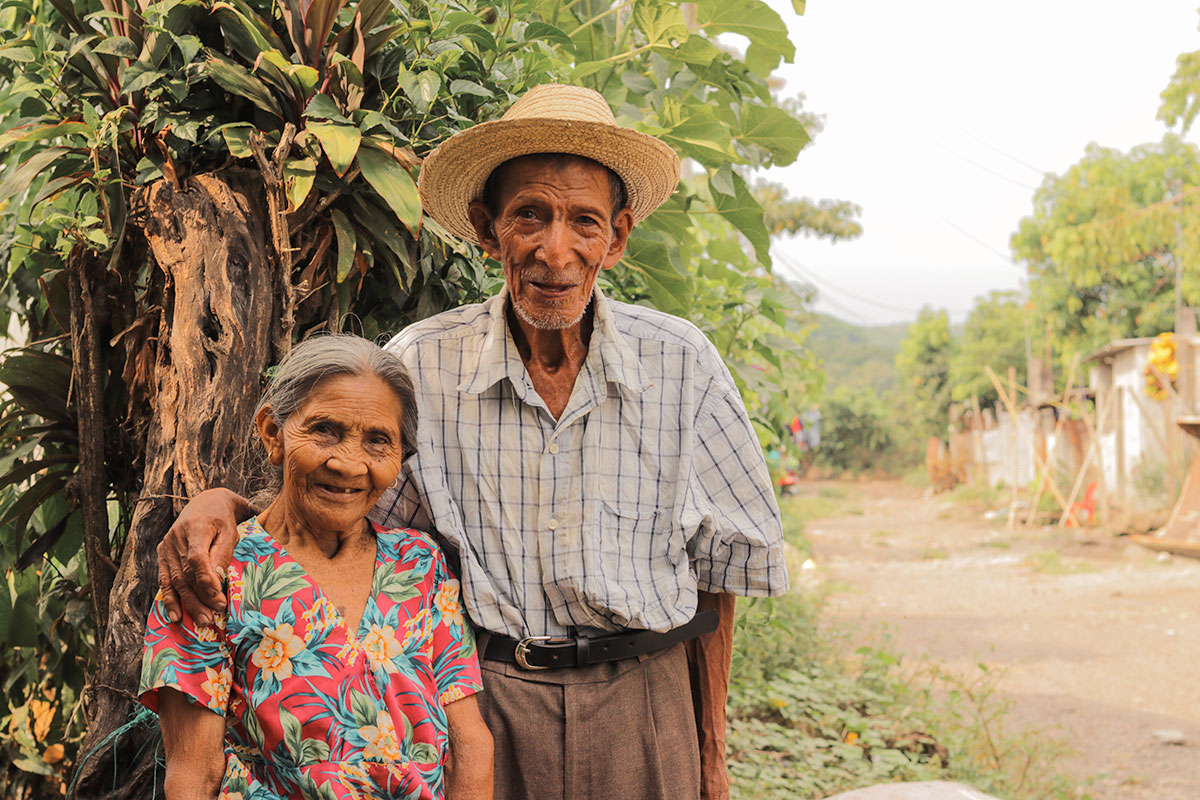
Francisco, 78, and María, 77, standing outside their home in the Patulul community in 2025.
From 'holy corn' to the love found in sponsorship
Work, for Francisco, is not just a normal part of life, but is also the thing that gives him purpose each day.
At 78 years old now, he keeps working because he says it makes him feel better.
“Thanks to God [because] he gave me life, and I’m still fighting (to live),” Francisco said.
Francisco works on a farm, located 10 minutes from his house, a distance he would walk each day carrying the special lunch María would pack just for him of beans with eggs or chicken with rice, among other things.
He works seven days a week tending goats, feeding other livestock and cutting grass. He’s paid 45 quetzales per day ($5.87 USD), which is not enough to cover the basic costs of living.
For years, Francisco maintained a crop of corn on land his employer let him plant rent free. His corn crop was a staple in his family, providing them with food many times throughout life when they had nothing else.
María called it the “holy corn.”
Besides being a daily staple food and cash crop in Guatemala, corn is a sacred, vital piece of the country’s history, from ancestral times with the Mayans up to today. Corn has been central to the culture and survival of countless generations.
“We really depend on the holy corn because that’s what we eat,” said María, who ground the corn from their crops to make tortillas. “If there’s none, we can’t eat.
“Corn is the best. When we have it, we’re happy. Even if it’s just one or two tortillas, that’s enough.”
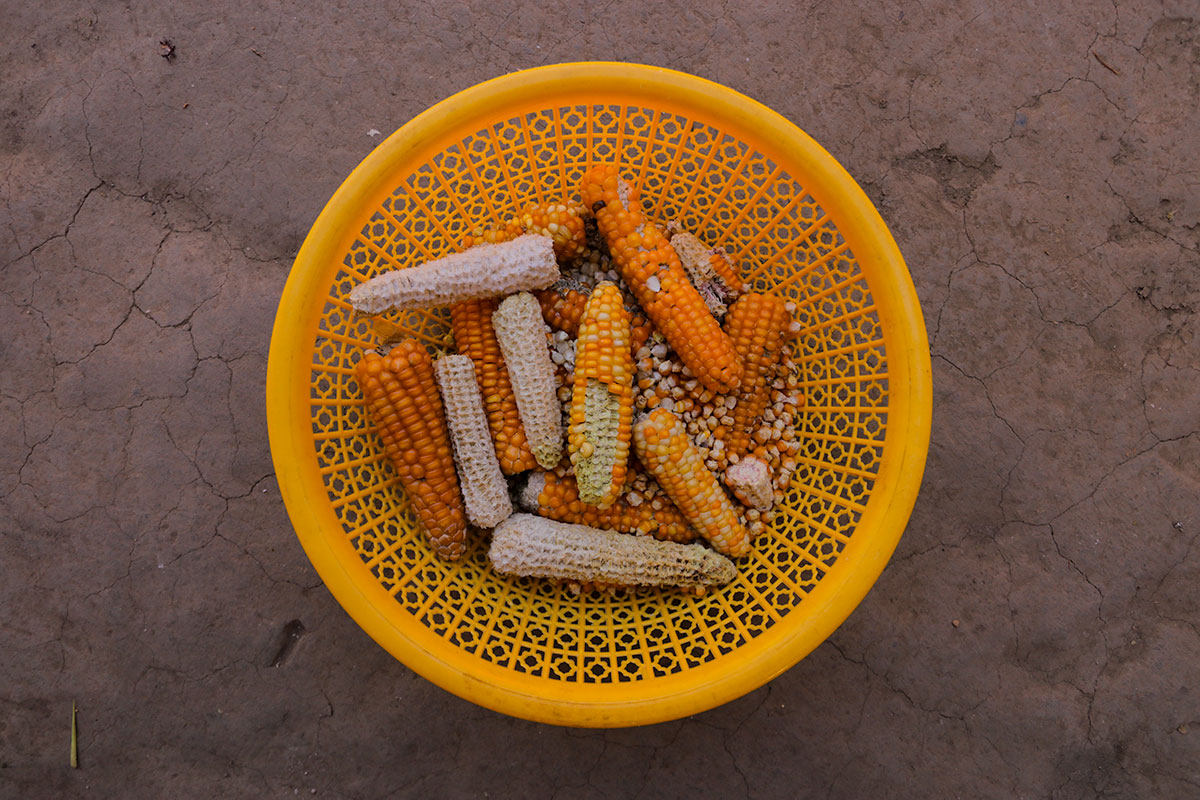
Corn (known as maize) is used to make tortillas and tamales, among other things. Corn tortillas in Guatemala are typically served with every meal, and it is often said that ‘if there are no tortillas for the meal, then there is no meal.’
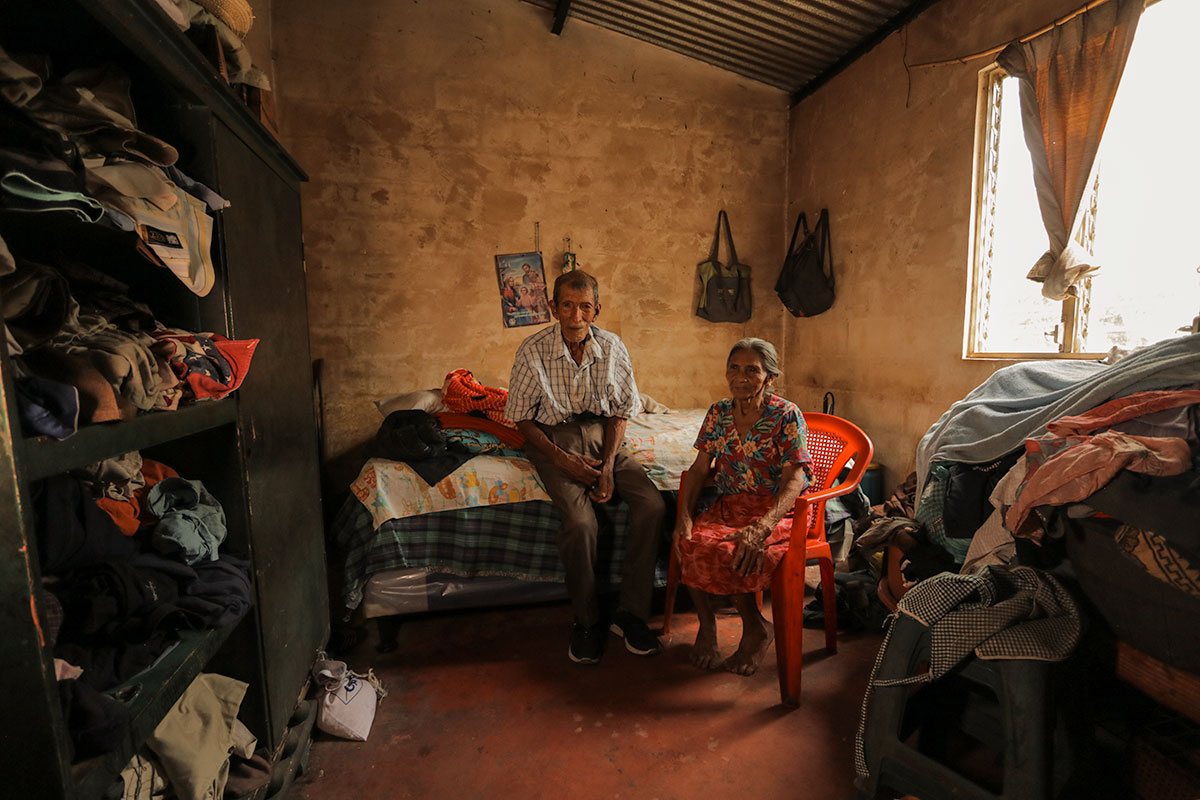
Francisco and María are pictured at home in their bedroom. Francisco walked to work on a farm seven days a week carrying the lunch María lovingly packed for him.
Almost 10 years ago, Francisco and María entered a time in their lives when they didn’t have to rely solely on Francisco’s wages and their corn crop.
At different times, both were sponsored through Unbound’s elder sponsorship program. Older adults represent 10% of Unbound’s sponsored population, making the organization one of the largest U.S.-based international development programs for older adults.
Sponsorship provides steady support through direct cash assistance or other resources for needs like nutrition, medical care and housing. Activities designed exclusively for elders encourage fellowship, while connection with a sponsor gives hope.
Combining their sponsorship benefits, Francisco and María alternated months buying extra food with buying fertilizer and seeds for their corn crop.
“The help they (the sponsors) send us is a blessing for our food,” María said in 2025. “We don’t have much money to buy more, but if we have beans with a little rice, that gets us through the day.”
Since neither Francisco nor María can read or write, their granddaughter Clara writes their letters to their sponsors for them. When Francisco underwent surgery a few years ago, they received a letter of encouragement from his sponsor along with a photo.
If he ever has the chance to see his sponsor in person, Francisco said, “I would greet [my sponsor] and welcome [them] with love.”
Their sponsor’s photo found a place alongside the other cherished items in their home — on the wall next to the artwork of Jesus.
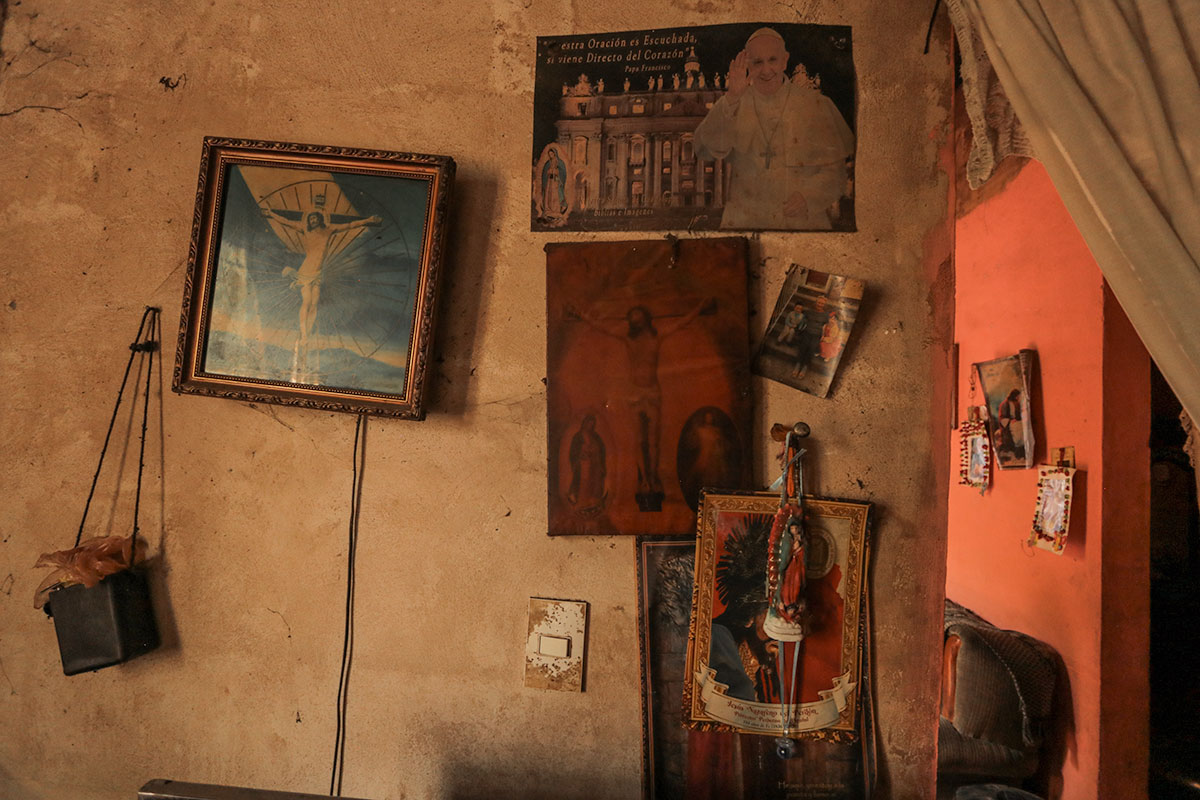
The walls in Francisco and María’s living space are adorned with items they have cherished throughout life — representing faith, family and their relationship with their sponsors.
'May God send even more blessings to them'
Unbound’s mission is deeply rooted in love.
Recently, President and CEO Ashley Hufft reflected on 1 John 3:18, “… let us not love in word or speech but in deed and truth.”
“I cannot imagine working toward a vision of a world free from poverty without talking about love,” Hufft said. “For when love shapes action, it is transformative.”
Sponsorship is an act of love.
So often, aging populations are isolated or forgotten, but elder sponsorship helps older adults to live out their remaining years with honor and dignity.
In August 2025, María told Unbound, “I’m happy … because our sponsor fights for us and sends us help. Thank you for helping the poor. May God send even more blessings to them because they’re struggling (walking) with us.”
In November 2025, María was rushed to the hospital with abdominal pain. She underwent surgery for a hernia but couldn’t recover. She passed away on Nov. 14.
Clara, their granddaughter, cares for Francisco now, helping him manage his sponsorship benefits to ensure his daily needs are met. María’s absence has left a void.
“We miss her so much,” said Clara, 34. “We miss her jokes and laughter. I relied on her, and she relied on me.”
Francisco still walks to work on the farm each day. Clara packs his lunch. He harvested his final crop of corn last year, as the field is now to be used for cultivating rubber trees (a fast-growing tropical tree), and he doesn’t walk to church so much without María now.
Still, he’s in awe of how his love always looked for the blessings in life.
“My wife’s faith was miraculous,” he said.
Clara treasures memories of María’s wisdom from a life well-lived in love and faith.
“She would always say to keep moving forward and to leave everything in God’s hands.”
Support other older adults in poverty, like Francisco and María, to age with honor and dignity. Learn more about Unbound’s elder sponsorship program, and sponsor an older adult today.
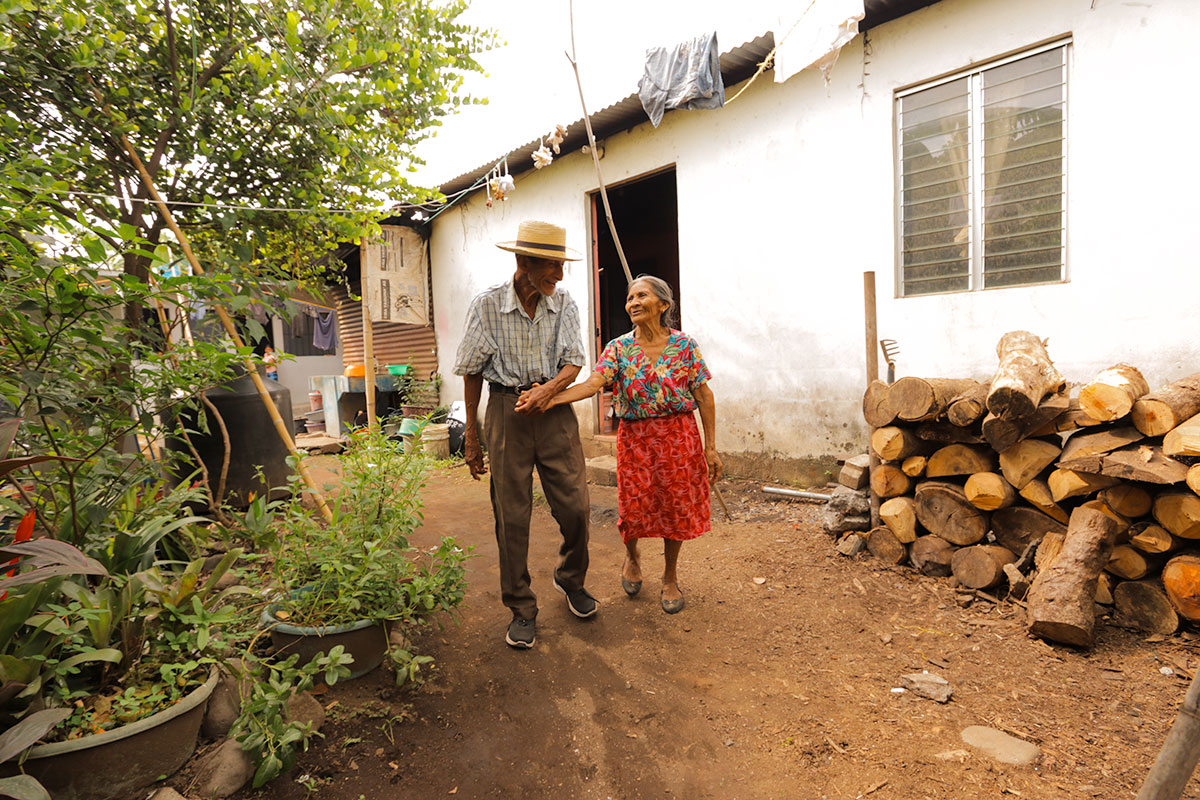
Francisco and María walk hand in hand outside their home in mid-2025. In November, Francisco laid his love to rest after more than 58 years together.
There are always problems [in life], but you pray to God and keep going.
— María, Sponsored elder in Guatemala
Unbound’s regional reporter in Guatemala, Oscar Tuch, contributed information and photos for this story.